telescopecomparison · 2-way
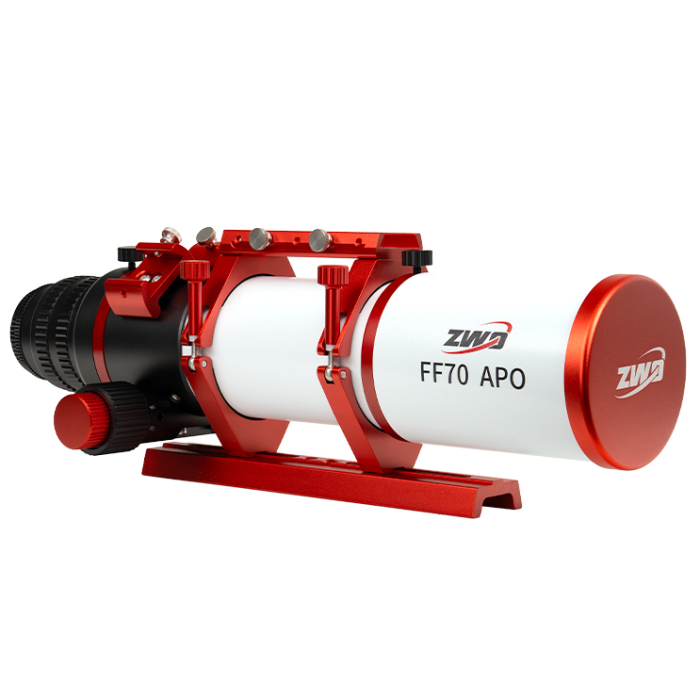
ZWO FF70 APO vs Stellarvue SVX080T-3SV
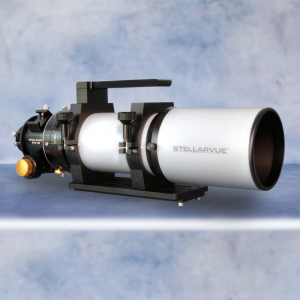
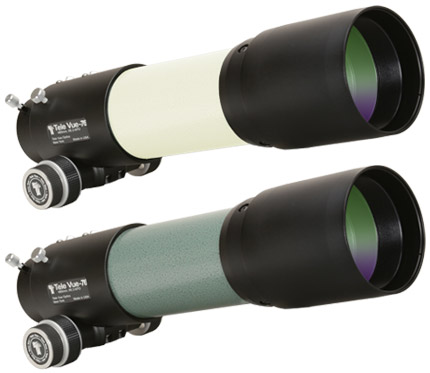
Stellarvue
SVX080T-3SV
Best suited for beginners and wide-field enthusiasts running a portable travel rig.
Key differences
-12% aperture
Slower by 1.0 f-stops
Specifications
| Specification | ZWO FF70 APO | Stellarvue SVX080T-3SV |
|---|---|---|
| Optics | ||
| Type | refractor | refractor |
| Optical design | Apo quadruplet ED | Apo triplet |
| Aperture | 70mm | 80mm |
| Focal length | 490mm | 480mm |
| Native f/ratio | f/7.0 | f/6.0 |
| Image circle | 44mm | 44mm |
| Full-frame support | Yes | Yes |
| Physical | ||
| Weight | 2.5kg | 4.5kg |
Advantages of ZWO FF70 APO
- Lighter (2.5kg vs 4.5kg) — easier to travel with
Advantages of Stellarvue SVX080T-3SV
- 14% more light-gathering aperture
- Faster optics at f/6 vs f/7
Best for — ZWO FF70 APO
- Large emission nebulae and star clusters
- Full-frame astro cameras and DSLRs
Best for — Stellarvue SVX080T-3SV
- Large emission nebulae and star clusters
- Full-frame astro cameras and DSLRs
ZWO FF70 APO — typical FOV & scale
- With Full-frame (36×24mm, 3.76µm)FOV: 4.21° × 2.81°Scale: 1.58"/px
- With APS-C (23.5×15.7mm, 3.76µm)FOV: 2.75° × 1.84°Scale: 1.58"/px
- With IMX533 square (11.3×11.3mm, 3.76µm)FOV: 1.32° × 1.32°Scale: 1.58"/px
Stellarvue SVX080T-3SV — typical FOV & scale
- With Full-frame (36×24mm, 3.76µm)FOV: 4.30° × 2.86°Scale: 1.62"/px
- With APS-C (23.5×15.7mm, 3.76µm)FOV: 2.81° × 1.87°Scale: 1.62"/px
- With IMX533 square (11.3×11.3mm, 3.76µm)FOV: 1.35° × 1.35°Scale: 1.62"/px
ZWO FF70 APO — recommended user
Best suited for beginners and wide-field enthusiasts running a portable travel rig.
Stellarvue SVX080T-3SV — recommended user
Best suited for beginners and wide-field enthusiasts running a portable travel rig.