cameracomparison · 2-way
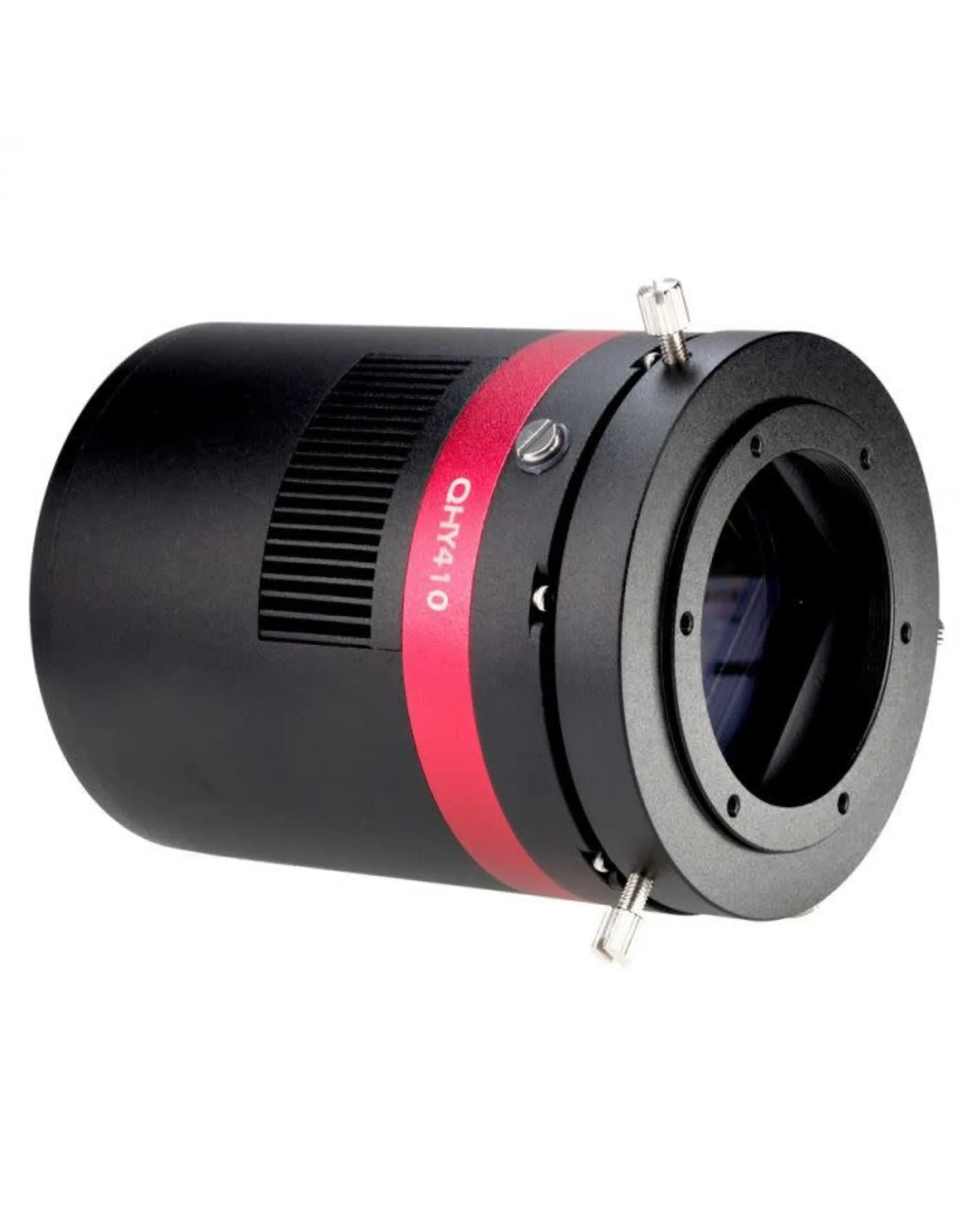
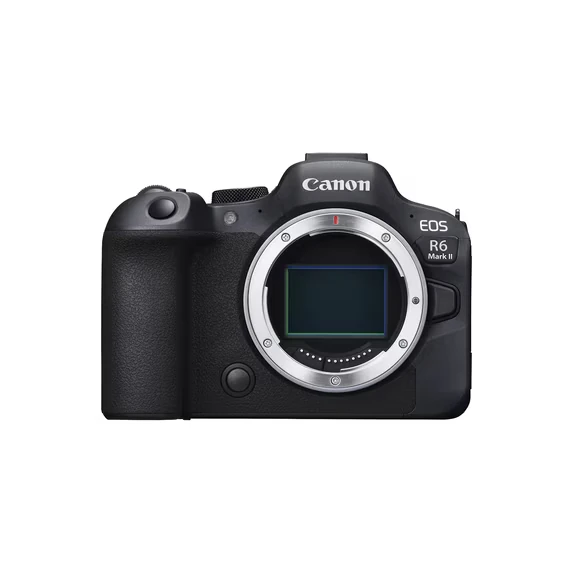
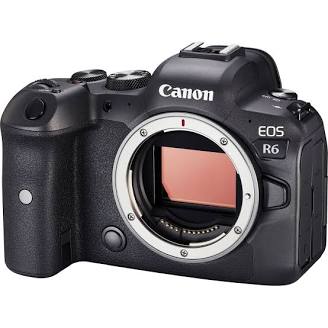
Canon EOS R6 vs ZWO ASI2400MC Pro
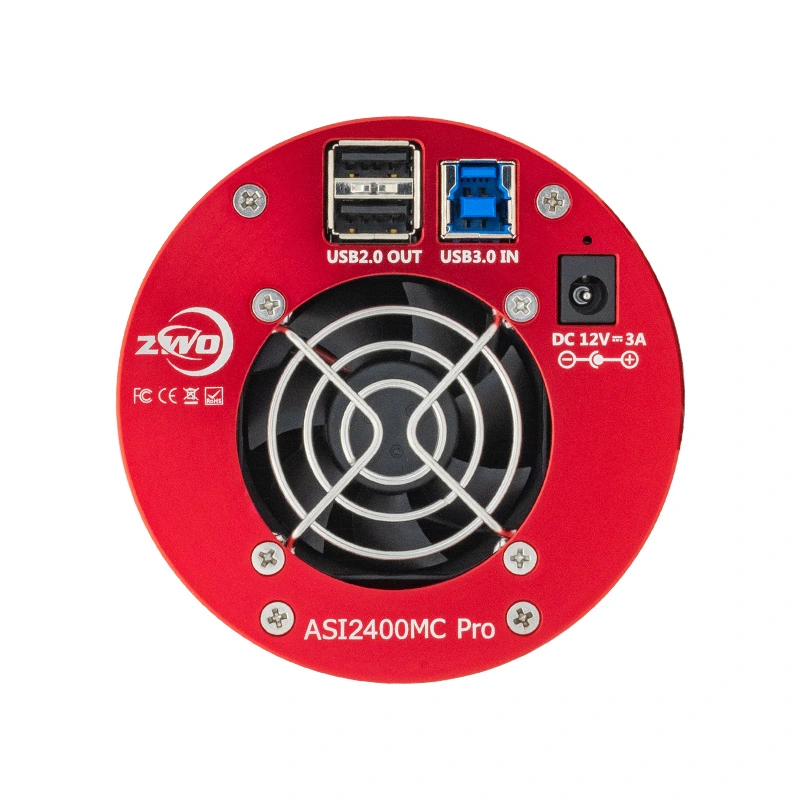
Key differences
Larger pixels (6.56µm vs 5.94µm)
-18% more resolution
Uncooled
Specifications
| Specification | Canon EOS R6 | ZWO ASI2400MC Pro |
|---|---|---|
| Sensor | ||
| Type | Mirrorless | Dedicated Cooled |
| Sensor | Canon Dual Pixel CMOS | Sony IMX410 |
| Sensor tech | CMOS | CMOS |
| Format | Full Frame | Full Frame |
| Sensor size | 36.0×24.0mm | 36.0×24.0mm |
| Diagonal | 43.3mm | 43.3mm |
| Pixel size | 6.56µm | 5.94µm |
| Resolution | 5472×3648 | 6072×4042 |
| Megapixels | 20.1MP | 24.5MP |
| Color | Yes | Yes |
| Cooling | ||
| Cooled | No | Yes |
| Performance | ||
| Full well | 80280e⁻ | 100000e⁻ |
| Peak QE | 55% | 80% |
Advantages of Canon EOS R6
- Larger pixels — better low-light per-pixel sensitivity
Advantages of ZWO ASI2400MC Pro
- Higher resolution (24.5MP vs 20.1MP)
- Regulated cooling for long exposures
Best for — Canon EOS R6
- Wide-field mosaics and full-frame telescopes
- Fast, low-noise deep-sky at short focal lengths
- One-shot color — quick results, less processing
Best for — ZWO ASI2400MC Pro
- Wide-field mosaics and full-frame telescopes
- Fast, low-noise deep-sky at short focal lengths
- Long-exposure deep-sky under any sky
- One-shot color — quick results, less processing
Canon EOS R6 — typical FOV & scale
- On 250mm refractor (wide)FOV: 8.25° × 5.50°Scale: 5.41"/px
- On 800mm SCT reducerFOV: 2.58° × 1.72°Scale: 1.69"/px
- On 2000mm SCT nativeFOV: 1.03° × 0.69°Scale: 0.68"/px
ZWO ASI2400MC Pro — typical FOV & scale
- On 250mm refractor (wide)FOV: 8.25° × 5.50°Scale: 4.90"/px
- On 800mm SCT reducerFOV: 2.58° × 1.72°Scale: 1.53"/px
- On 2000mm SCT nativeFOV: 1.03° × 0.69°Scale: 0.61"/px
Canon EOS R6 — recommended user
A strong fit for photographers stepping into astro pairing with wide-field refractors.
ZWO ASI2400MC Pro — recommended user
A strong fit for dedicated deep-sky imagers pairing with wide-field refractors.